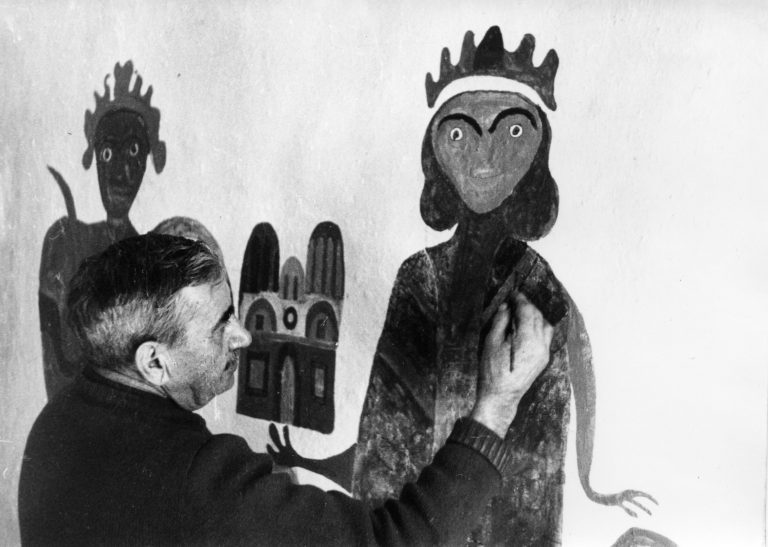
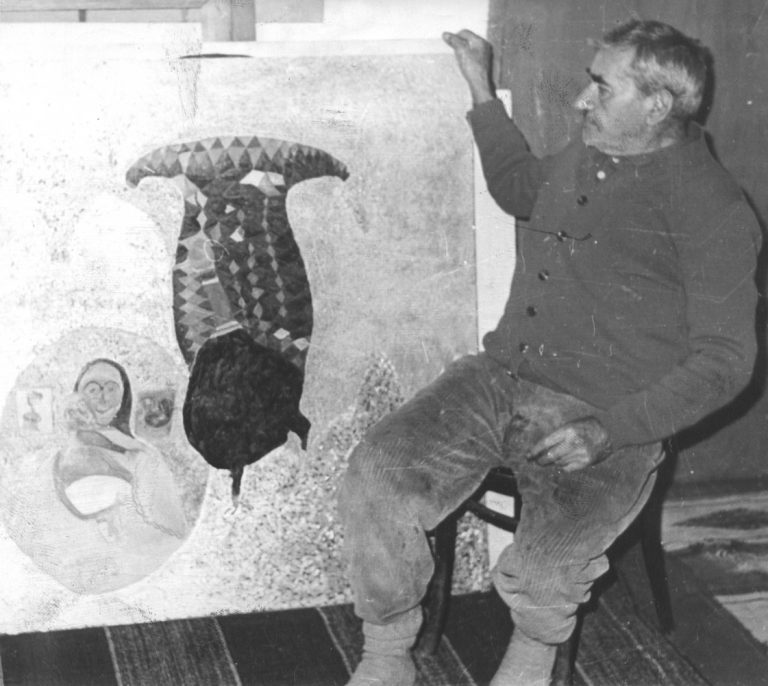
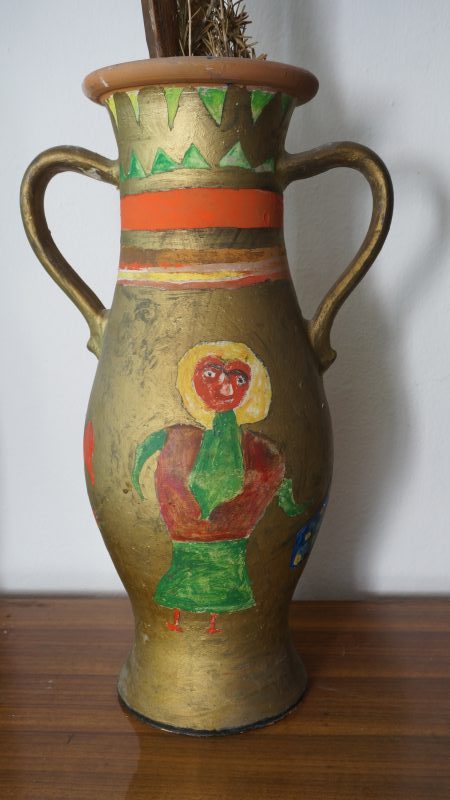
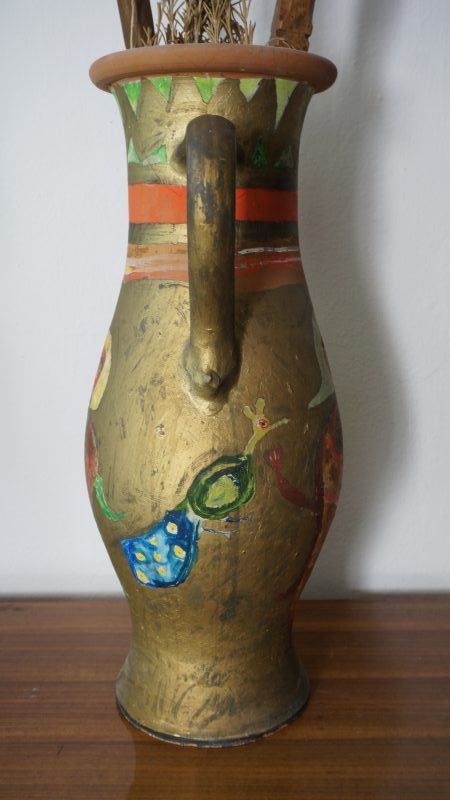
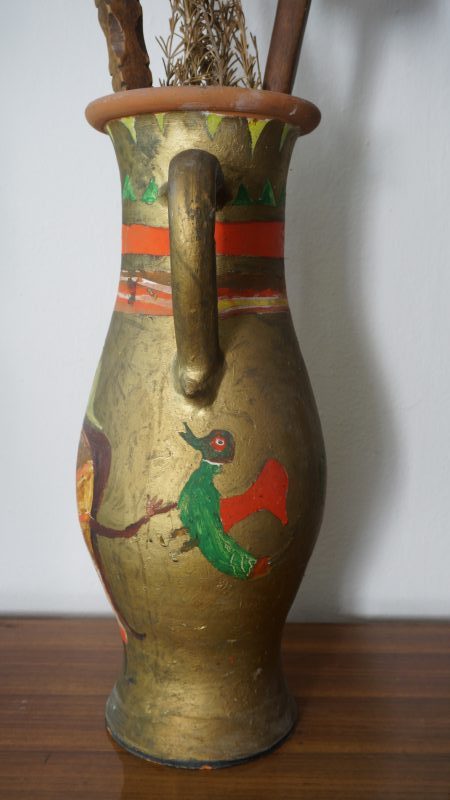
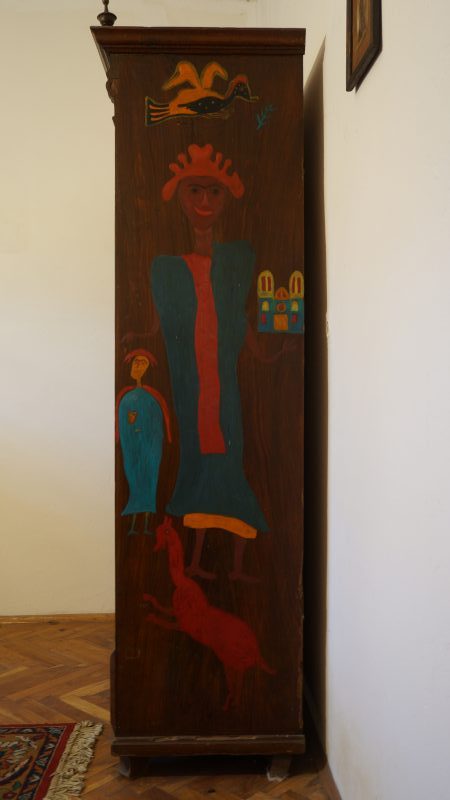
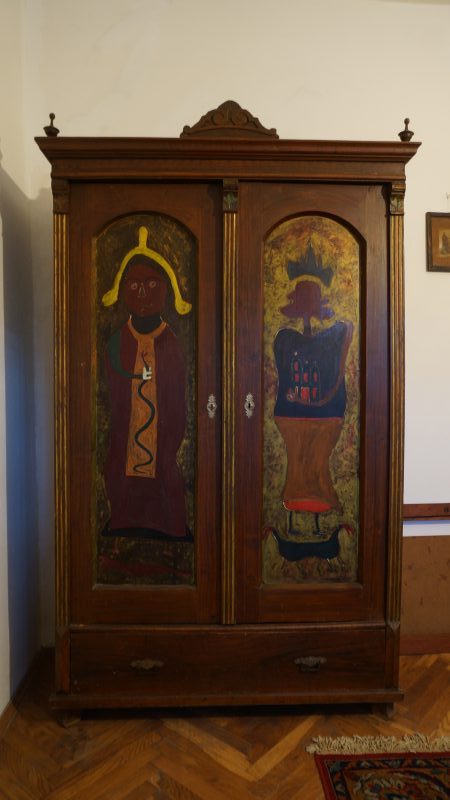
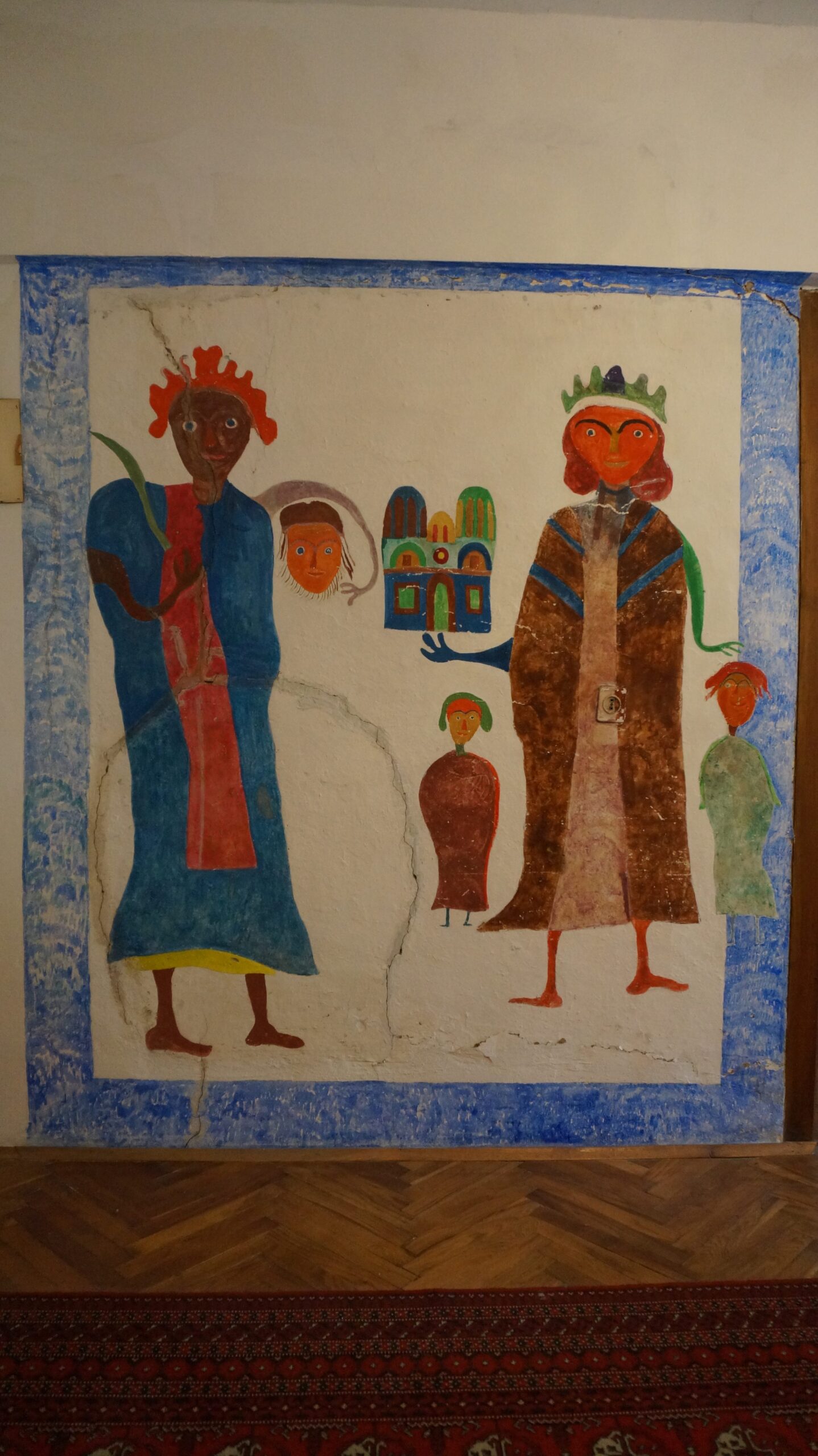
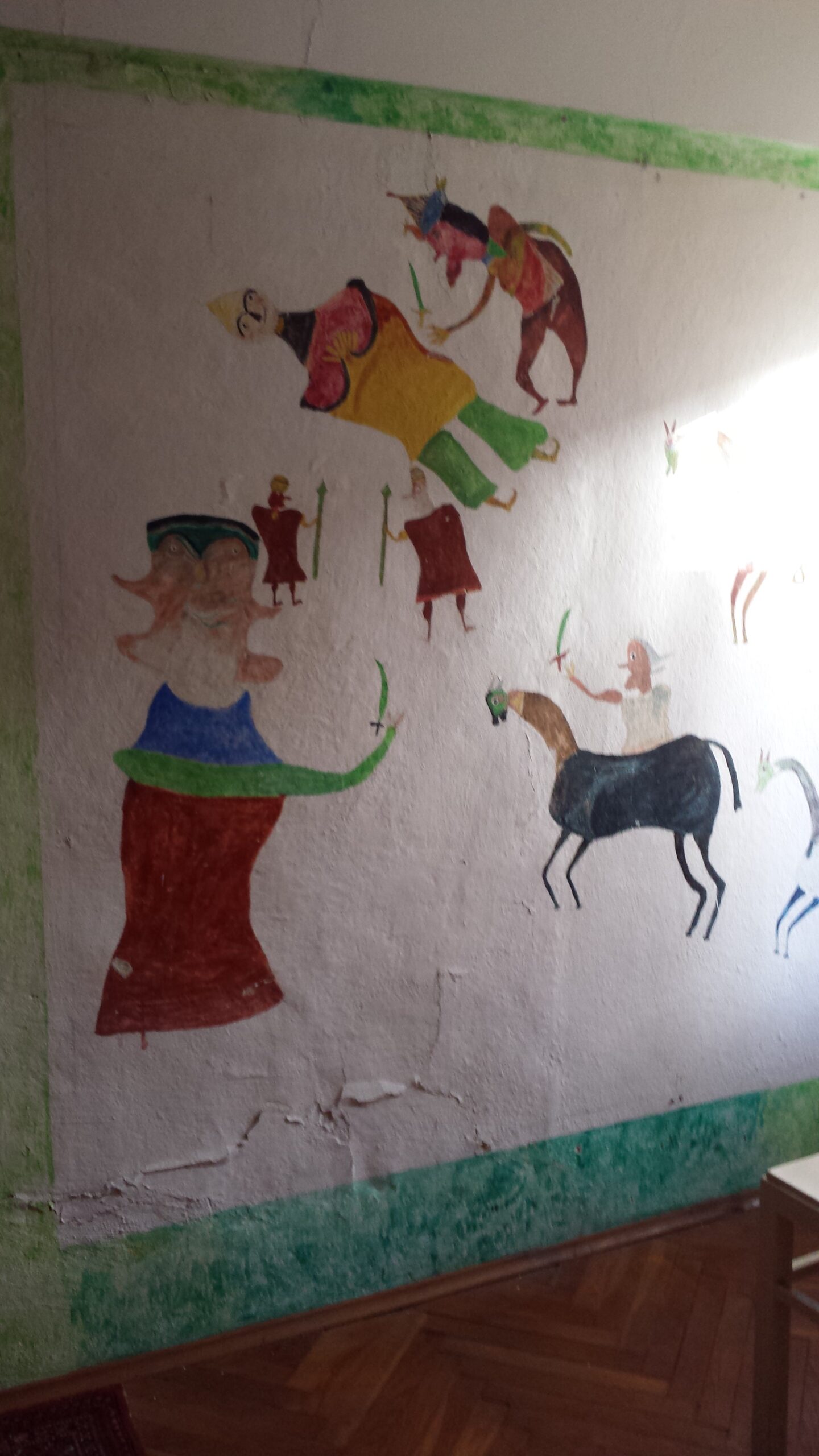
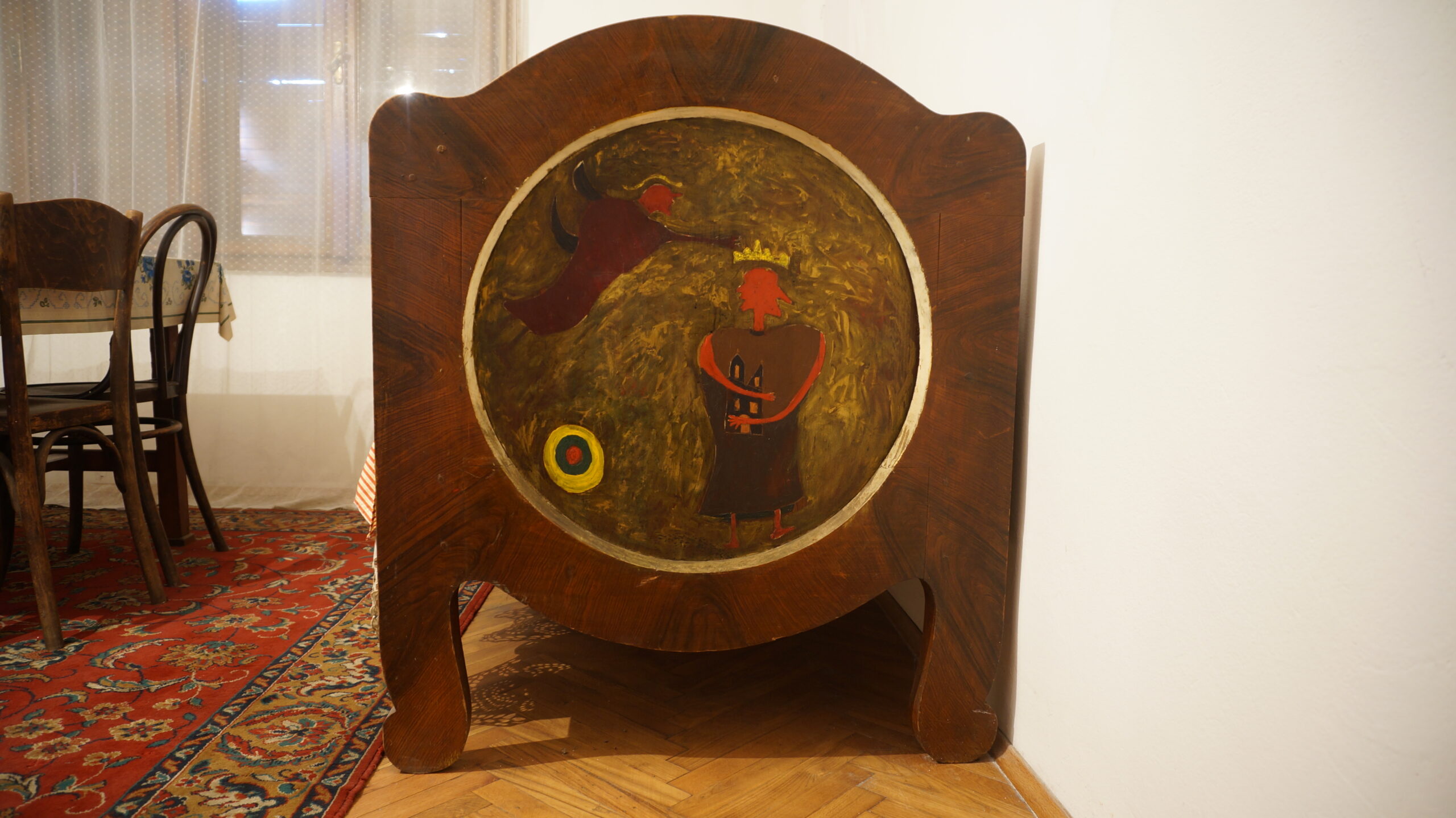
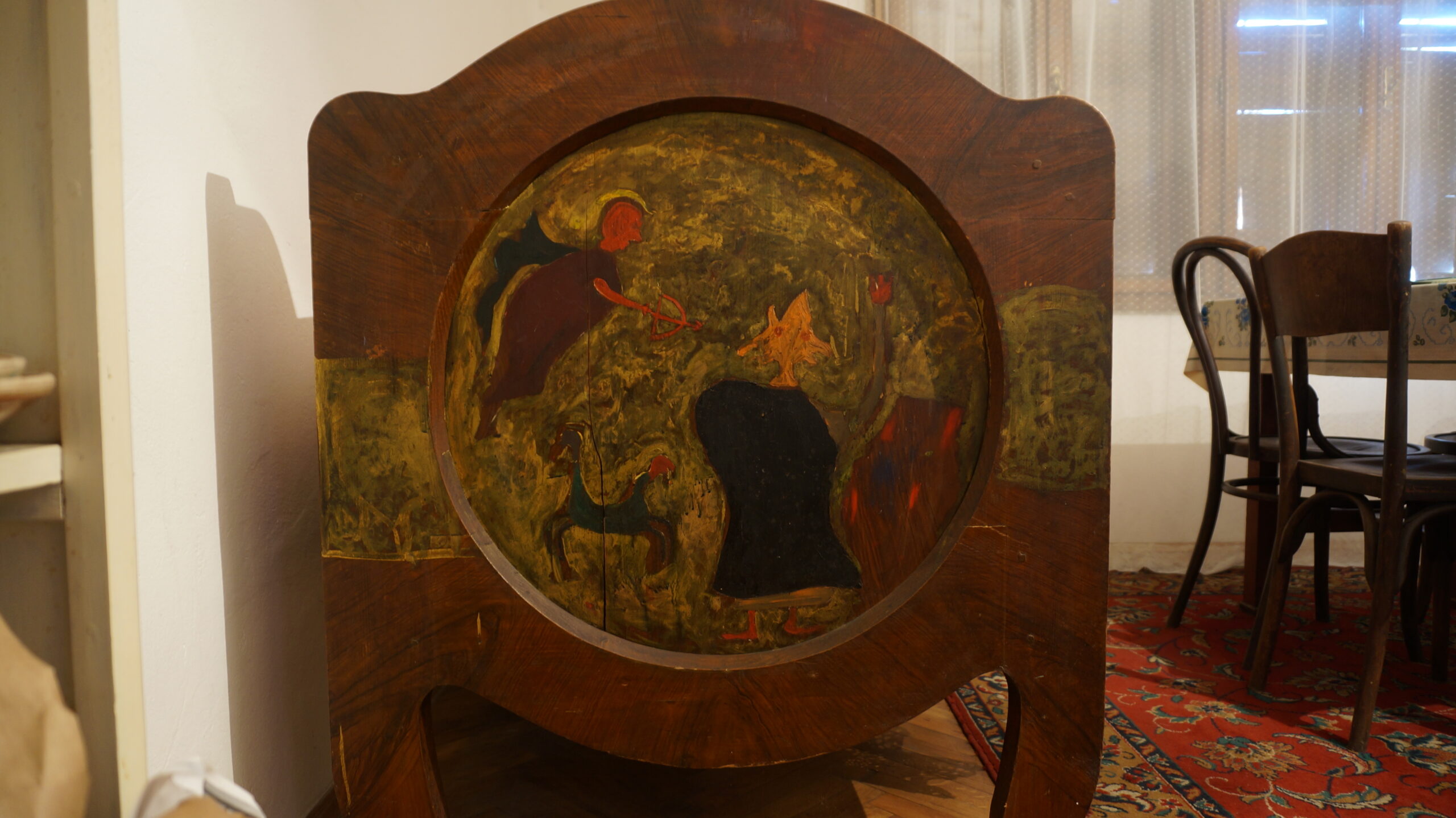
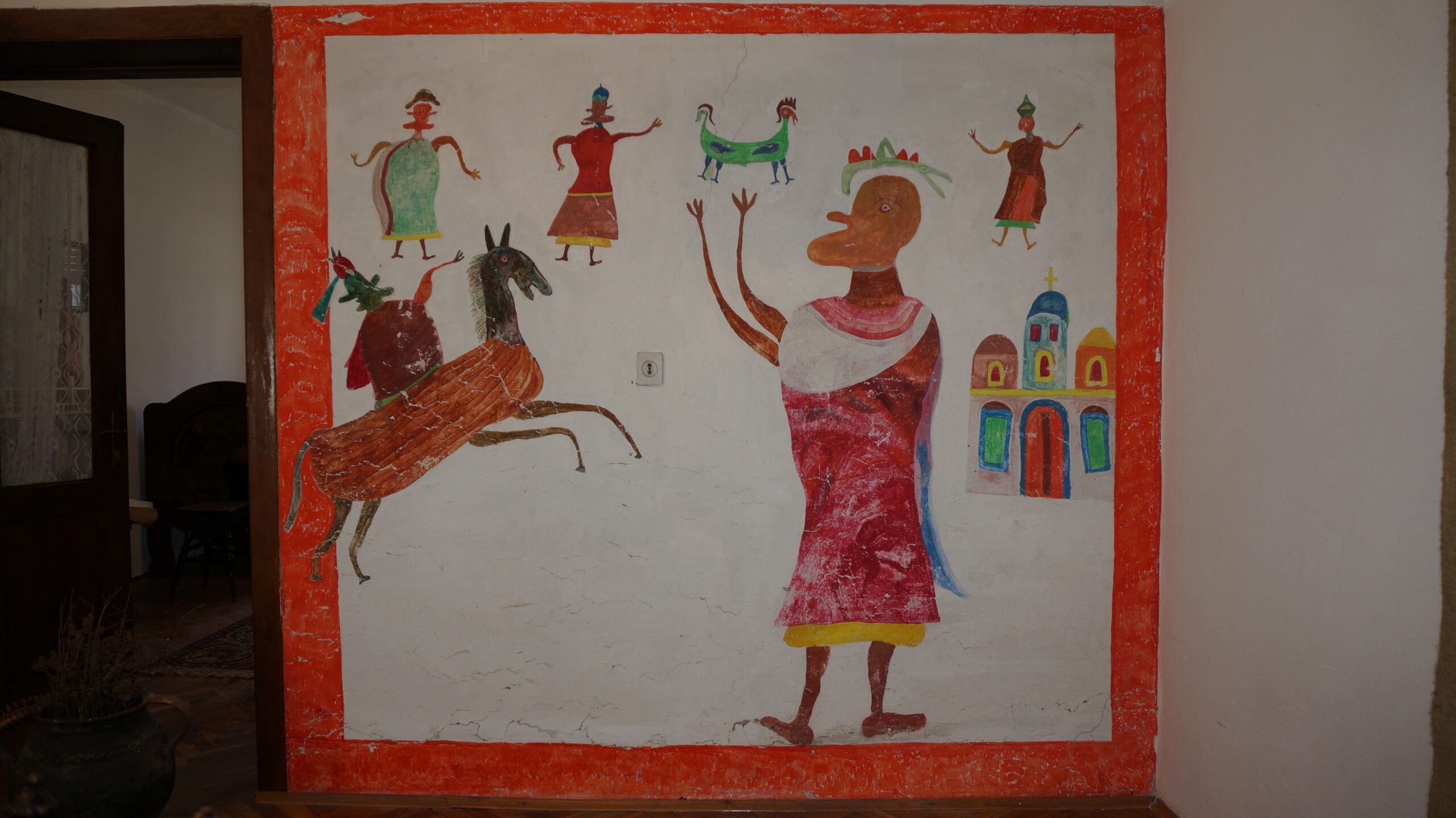
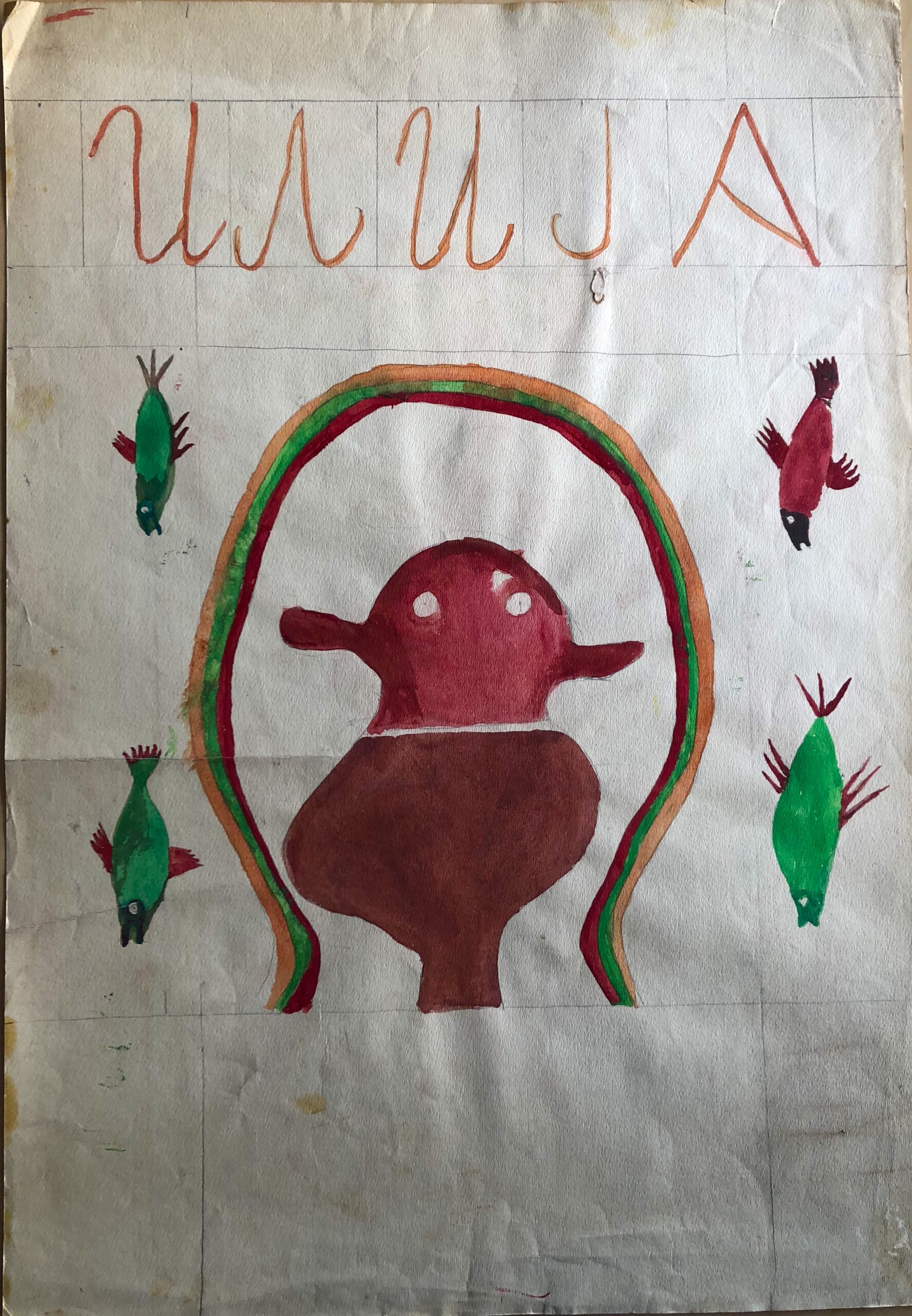
Ilija made more than 2,000 paintings and drawings, a significant part of which is held by the Ilija&Mangelos Foundation in Novi Sad, Zander Collection in Köln and Ilijanum museum in Šid, Serbia. In 2007 the London-based magazine Raw Vision named Ilija one of the 50 classics of art brut worldwide. His paintings have been exhibited on several occasions alongside works by Picasso, Klee, Kandinsky, Chagall, Darger and Rousseau.
“ilija made his own world like
a new construction that followed
a previous destruction after some
preceding destruction
which is not seeable though.
whether we call it a construction or reconstruction
– the world is – in all likelihood – original…” Mangelos
“The paintings signed Ilija (in Cyrillic letters) by a shaky hand have been, ever since they appeared back in 1957, an inexplicable mystery for their numerous critics who can claim with certainty only one thing about these paintings: they exemplify a stunningly high-quality art, which evades all constraints of its origin, stylistic classification, historical movement and cultural context…
The scenes and figures which have no recognizable features of our world are introduced (distributed, or lined alongside, above or beneath each other) on a strictly two-dimensional plane in which there is not a single trace of spatial illusionism and where the substance of color applied with extreme sensitivity is the direct bearer of the expression and sensibility, or in a word, of the very fascination of the painting. Bosilj’s paintings are indeed painted or visualized stories, but in these paintings which fundamentally speak of the two-sided human destiny and the two-faced human nature (life-death, good-evil, beautiful-ugly, truth-lie, etc.), which are existential basics, all narration is condensed into emblematic figures, archetypal images and timeless symbols…
Whether Bosilj is a supposedly “naïve” artist, or some other kind, is totally irrelevant today, at the end of a century which has seen enormous extremes in art, but also great achievements within those extremes, what matters is that Bosilj is a very idiosyncratic artist, who is easily recognizable as such in the contemporary world of art in general.”
Ješa Denegri